

Combining wearable technology with athlete self-assessments enables meaningful, long-term performance tracking in female youth soccer. The approach supports more individualized training decisions and strengthens evidence-based talent development.
Background
Performance monitoring in elite youth soccer is increasingly data-driven, yet still incomplete. While wearables can quantify external load and physical output (e.g., speed, distance, ball actions), they do not capture internal load and the athlete’s psychological response, factors that strongly influence motivation, recovery behaviour, and long-term development.
For coaches and performance staff, this creates a practical challenge: athletes may deliver high physical output while still feeling exhausted or dissatisfied, and these effects can differ substantially depending on age group and playing position. At the same time, performance development is rarely linear, players can improve in some metrics while declining in others. Identifying such trends reliably requires robust longitudinal analysis and metrics that are not overly sensitive to outliers.
Innovative Monitoring Approach
In this project we investigated how combining wearable sensor technology with subjective post-training feedback can enable more individualized and meaningful performance monitoring in female youth soccer.
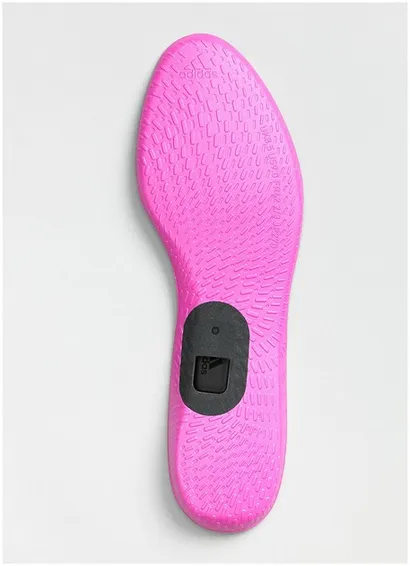
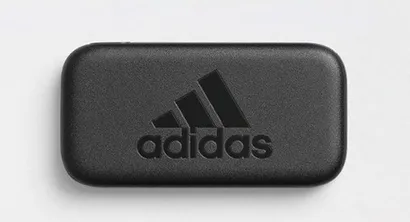
Over a 14-month period, data from 46 female youth players (U17 and U20) were collected during regular training sessions using adidas TEAM-FX sensor insoles with an integrated foot-mounted IMU. The system processed inertial data through a multi-stage machine learning pipeline to derive football-relevant metrics, such as peak speed and absolute distance in 5-second intervals, as well as ball speed during detected kick events.
In parallel, players submitted two short post-session ratings via an app using a 5-point Likert scale, reporting intensity and happiness. Data were analysed by combining longitudinal trend detection using the modified Mann–Kendall test and correlation analysis between subjective and objective metrics.
Key Findings and Impact
The study demonstrates that integrating wearable-based motion analytics with subjective athlete feedback provides a more complete and role-sensitive understanding of performance development.
The study found that around half of the players showed significant performance trends over time – both positive and negative. The most common changes were in top speed. Surprisingly, the subjectively perceived training intensity correlated negatively with the actual ball speed in several cases, especially among goalkeepers and defenders. Conversely, there were positive correlations between intensity and running performance: the more intense the training was perceived to be, the more distance was often covered, especially by defenders.
Implications for Practice
Overall, a scalable monitoring approach was identified as having substantial potential to support individualized training optimization, enable early detection of fatigue and performance decline patterns, and facilitate the systematic integration of psychological readiness and perceived performance into elite youth development programs, particularly in female soccer, where longitudinal data remain limited.
Publication: Kranzinger, S., Kranzinger, C., Kremser, W., & Duemler, B. (2025). Performance tracking in female youth soccer through wearables and subjective assessments. Frontiers in Sports and Active Living, 7, 1627820.